AI Study Tutors & Microlearning Sprints in India 2026
AI Study Tutors & Microlearning Sprints in India 2026
✨ Powered by AI tutors + microlearning sprints for smarter, calmer studying in India.
Key Takeaways
>AI study tutors now act like one-to-one digital mentors for Indian students, answering doubts, tracking mistakes, and guiding revision for boards and competitive exams. [aimithra](https://aimithra.in) >Microlearning sprints of around 3–10 minutes match modern attention spans and can significantly improve completion and retention compared with long lectures. [konstantly](https://konstantly.com/es/blog/microlearning-complete-guide) >Combining AI tutors with 15-minute microlearning blocks, active recall, and spaced repetition creates a powerful, Class 12+ friendly study system. >Indian universities and edtechs are shifting towards skill-first, AI-supported learning, making study strategies like these essential for future careers. [hindustantimes](https://www.hindustantimes.com/education/features/learning-trends-2026-the-big-academic-shifts-defining-the-year-101764758018650.html)Learning Objectives 🎯
After reading, you will be able to explain what AI study tutors and microlearning are, and design a simple daily plan using both.
>– Define AI study tutors and microlearning sprints in simple, exam-focused language. >– Describe at least three benefits of combining AI support with short, focused study blocks. >– Build a 60–90 minute daily study routine using 15-minute AI-supported sprints. >– Evaluate AI tools safely and ethically, avoiding over-dependence or misinformation. >– Connect these skills with future career demands in India’s AI-driven job market. [hindustantimes](https://www.hindustantimes.com/ht-insight/future-tech/forces-shaping-the-future-of-learning-and-jobs-in-2026-101769581773693.html)
Introduction: Why AI Study Tutors & Microlearning Matter in 2026
In 40–60 words: Indian education is shifting from rote learning to skill-first, AI-supported learning. This guide shows how AI tutors plus short microlearning sprints can help you learn faster, remember more, and reduce exam stress while staying ethical and in control of your learning.
[hindustantimes](https://www.hindustantimes.com/education/features/learning-trends-2026-the-big-academic-shifts-defining-the-year-101764758018650.html)Across India, schools, universities, and coaching centres are moving from pure rote learning towards skill-based teaching where students must apply concepts, think critically, and solve real problems, not just memorise notes. At the same time, AI tools are entering classrooms and homes, from AI-mithra’s syllabus-trained assistants to Edza AI’s JEE/NEET tutors that act like personal digital teachers.
[tribuneindia](https://www.tribuneindia.com/news/business/will-tuitions-be-replaced-in-2026-edza-ai-launches-jee-neet-tutors/)In parallel, research in learning science and edtech shows that short, focused microlearning sessions of a few minutes can match human attention spans and significantly boost engagement and completion compared with long lectures. For busy Indian students juggling boards, entrance exams, projects, and part-time work, combining AI support with bite-sized learning is far more realistic than marathon cramming.
[elearningindustry](https://elearningindustry.com/microlearning-statistics-facts-and-trends)This article is designed for Class 12, undergraduate, and exam-focused learners who want practical strategies, not hype. You will learn how to safely use AI study tutors to clarify doubts, generate quiz questions, and plan revision, while using 15-minute sprints, active recall, and spaced repetition to build a strong, long-lasting memory of your subjects.
[hindustantimes](https://www.hindustantimes.com/ht-insight/future-tech/forces-shaping-the-future-of-learning-and-jobs-in-2026-101769581773693.html)Key Concepts: AI Tutors, Microlearning, and Brain-Friendly Study
This section defines AI study tutors, microlearning, active recall, and spaced repetition, and links them with how your brain actually learns and forgets information over time.
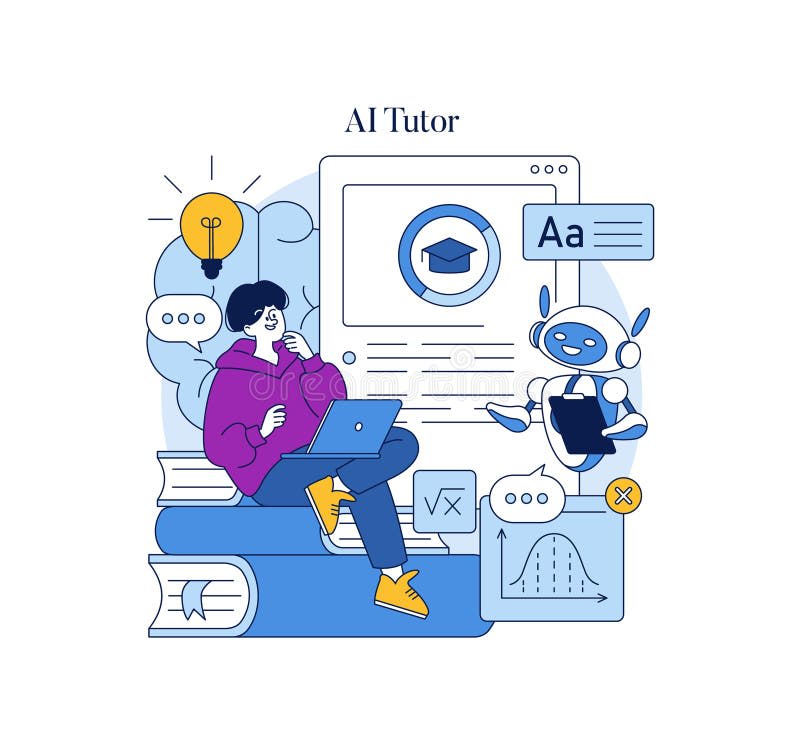
What is an AI study tutor?
>An AI study tutor is a digital system that uses artificial intelligence to answer doubts, explain concepts, and recommend practice questions in a conversational way, similar to a teacher. [aimithra](https://aimithra.in) >Platforms like AI-mithra align their AI tutors with specific syllabi such as NCERT or particular universities so that explanations stay close to your textbook and exam needs.i> [aimithra](https://aimithra.in) >Newer Indian tools like Edza AI remember your past mistakes, track weak areas, and adapt upcoming questions to focus on those gaps, creating a personalised learning loop. [tribuneindia](https://www.tribuneindia.com/news/business/will-tuitions-be-replaced-in-2026-edza-ai-launches-jee-neet-tutors/)What is microlearning?
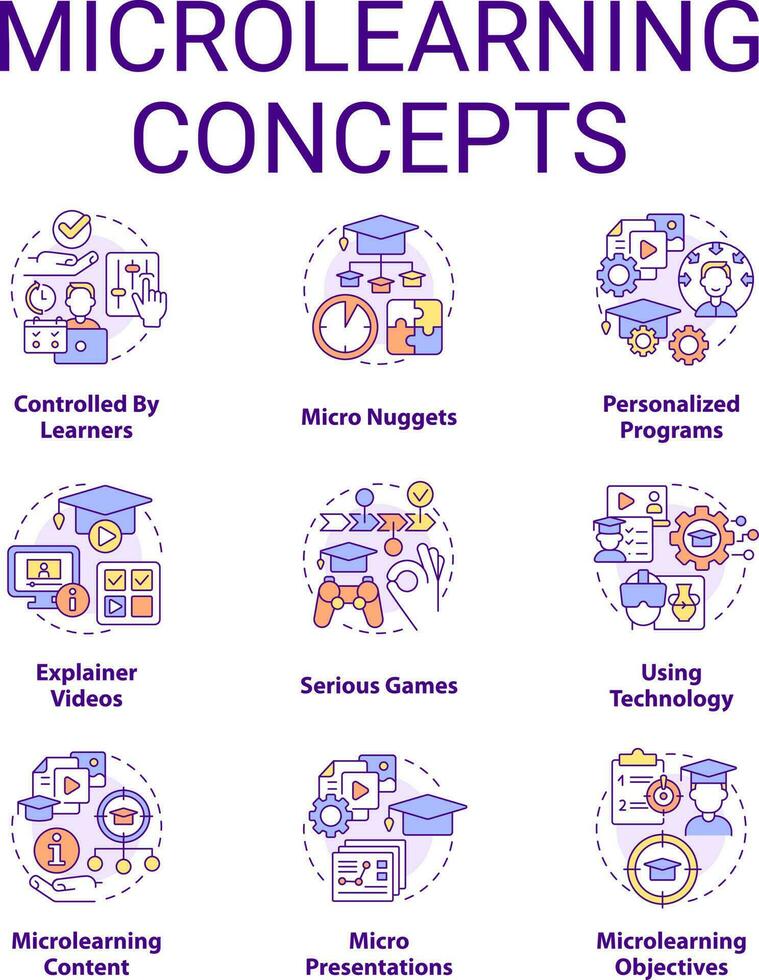
>Microlearning means learning in very short, focused units, typically 3–10 minutes, each targeting one clear objective or concept. [konstantly](https://konstantly.com/es/blog/microlearning-complete-guide) >Learning science studies show that videos and lessons under about 6 minutes achieve much higher engagement and completion than longer formats, especially online. [peer.asee](https://peer.asee.org/snackable-study-boosting-micro-learning-with-bite-size-videos.pdf) >Corporate and education reports note that microlearning modules often achieve 70–80 percent completion rates, compared with 20–30 percent for traditional e-learning courses. [rello](https://www.rello.in/2024/10/the-rise-of-microlearning-how-bite.html)Active recall and spaced repetition
>Active recall means testing yourself without looking at the answer, for example by using flashcards or short quizzes, which has been shown to build stronger long-term memory than re-reading.i> [peer.asee](https://peer.asee.org/snackable-study-boosting-micro-learning-with-bite-size-videos.pdf) >Spaced repetition spreads practice over days or weeks instead of repeating the same topic in one sitting; microlearning platforms increasingly use this to boost retention. [konstantly](https://konstantly.com/es/blog/microlearning-complete-guide) >Combining microlearning with spaced repetition can increase retention by several tens of percentage points compared with single long study sessions. [konstantly](https://konstantly.com/es/blog/microlearning-complete-guide)How AI and microlearning work together
>AI tutors can automatically generate short quizzes, summaries, or flashcards, turning any chapter into multiple microlearning units you can finish in 5–10 minutes. >Because AI systems track your errors, they can schedule difficult questions more often, effectively implementing spaced repetition while you focus on understanding. [hindustantimes](https://www.hindustantimes.com/ht-insight/future-tech/forces-shaping-the-future-of-learning-and-jobs-in-2026-101769581773693.html) >When used consciously, AI tutors plus microlearning give you personal coaching and a clear structure, while you still stay responsible for verifying answers with textbooks and teachers.Benefits & Applications for Indian Students
Here you will see concrete ways AI tutors and microlearning sprints can help with school boards, JEE/NEET, college exams, and long-term skill building in India.
1. Clearer concepts and faster doubt-solving
>AI tutors provide instant step-by-step explanations for maths, physics, and coding problems, reducing waiting time for a teacher or coaching batch. [youtube](https://www.youtube.com/watch?v=LmQluhiNLBE) >Because you can ask the same doubt in different ways, they support deeper understanding, especially when you combine them with your own handwritten notes and diagrams.2. Better focus with 15-minute sprints
>Breaking study into 15-minute microlearning sprints fits natural attention spans and reduces mental fatigue, which is crucial when juggling school, coaching, and family duties. [rello](https://www.rello.in/2024/10/the-rise-of-microlearning-how-bite.html) >Each sprint can follow a simple pattern: 5 minutes of AI-guided explanation, 7 minutes of practice questions, and 3 minutes of reflection and note-tweaking.3. Personalised exam preparation
>Indian AI tutoring products now offer dedicated flows for exams like JEE and NEET, using adaptive question sets and targeted revision based on recurring mistakes. [youtube](https://www.youtube.com/watch?v=LmQluhiNLBE) >GenAI tools integrated into search and learning platforms also help turn class notes into quizzes and flashcards aligned with your syllabus. [youtube](https://www.youtube.com/watch?v=LmQluhiNLBE)4. Career readiness and future skills
>Reports on the future of jobs in India highlight AI literacy, data skills, and critical thinking as fast-rising skills employers demand, often beating degrees alone. [indiatoday](https://www.indiatoday.in/jobs/story/top-5-skills-that-will-matter-more-than-your-college-degree-in-2026-linkedin-report-educ-2873445-2026-02-24) >By learning to use AI tutors responsibly and managing your own microlearning plan, you are practising exactly the self-directed, tech-enabled learning that future jobs require.Current Trends 2025–2026: How India Is Using AI & Microlearning
This section tracks fresh 2025–2026 developments: AI tutors for Indian exams, microlearning completion data, and skill-first university strategies.
AI tutors for school and entrance exams
>AI-mithra positions itself as India’s first AI-powered study assistant tailored to specific state and university syllabi, with 24×7 chatbot support and predictive question tools.i> [aimithra](https://aimithra.in) >Edza AI has launched AI tuition teachers for JEE and NEET that keep a persistent record of student errors and adapt each new problem set to those weak spots.i> [tribuneindia](https://www.tribuneindia.com/news/business/will-tuitions-be-replaced-in-2026-edza-ai-launches-jee-neet-tutors/) >Global platforms such as Google’s Gemini now integrate with exam prep in India, converting notes into study guides, flashcards, and practice tests for large exams like JEE. [youtube](https://www.youtube.com/watch?v=LmQluhiNLBE)Microlearning as mainstream study design
>Recent analyses estimate that well-designed microlearning programmes can reach completion rates above 70 percent, far higher than many traditional online courses. [rello](https://www.rello.in/2024/10/the-rise-of-microlearning-how-bite.html) >Studies of millions of video views on platforms such as edX found that learners strongly prefer videos under around 6 minutes, with retention and satisfaction dropping as length increases. [peer.asee](https://peer.asee.org/snackable-study-boosting-micro-learning-with-bite-size-videos.pdf) >Indian learning and development communities now actively teach 5-day microlearning sprint recipes, where each day’s activity takes under 7 minutes but builds one clear skill. [youtube](https://www.youtube.com/watch?v=gFBtE1aHAm0)Skill-first universities and AI-powered learning
>Articles on higher education in 2026 emphasise that Indian universities are shifting to skill-first curricula, industry collaboration, and modular micro-credentials. [education.economictimes.indiatimes](https://education.economictimes.indiatimes.com/news/higher-education/revolutionizing-higher-education-in-india-a-skill-first-approach-by-2026/126792498) >AI is being woven into courses across disciplines, while learning analytics track engagement and help identify at-risk students much earlier than before. [education.economictimes.indiatimes](https://education.economictimes.indiatimes.com/news/higher-education/revolutionizing-higher-education-in-india-a-skill-first-approach-by-2026/126792498) >LinkedIn’s 2026 skills report highlights AI, automation, data, and cybersecurity as rapidly rising skill clusters, accelerating the push towards continuous microlearning for professionals. [indiatoday](https://www.indiatoday.in/jobs/story/top-5-skills-that-will-matter-more-than-your-college-degree-in-2026-linkedin-report-educ-2873445-2026-02-24)Interactive Infographic: Why Microlearning Works
Tap any bar to see what current research suggests about its impact compared with traditional longer lessons.
Future Outlook 2026–2030: How Will Study Evolve?
Based on current trends, AI tutors and microlearning are likely to become default study infrastructure, while human teachers focus more on mentoring, ethics, and higher-order thinking.
More personalised, AI-first learning journeys
>By 2030, it is likely that most Indian learners will have personal AI mentor profiles that carry their learning history across schools, universities, and jobs, recommending micro-courses and revision plans as they grow. [youtube](https://www.youtube.com/watch?v=dDELRokzeIY) >These systems may auto-generate daily microlearning playlists based on your calendar, stress levels, and upcoming exams, leaving you to decide priorities and pacing.Teachers as mentors, not content downloaders
>With AI handling routine explanations and drilling, teachers can focus more on projects, conceptual debates, ethics, and socio-emotional support, especially in Indian classrooms that are often overcrowded. [education.economictimes.indiatimes](https://education.economictimes.indiatimes.com/news/higher-education/revolutionizing-higher-education-in-india-a-skill-first-approach-by-2026/126792498) >Schools and colleges will need to train faculty to design microlearning-based curricula and to supervise student use of AI safely and fairly.Risks and responsibilities
>Heavy dependence on AI for answers can weaken deep thinking and copying of AI-generated work may create academic integrity issues if not checked. >Students, parents, and institutions will need clear policies on verification, privacy, and bias in AI tools, along with strong digital literacy education. [youtube](https://www.youtube.com/watch?v=dDELRokzeIY) >For you as a learner, the safest rule is: let AI help you think, but never think for you; always cross-check key answers with textbooks, teachers, or official material.Knowledge Checkpoint Quiz ✅
Quick 5-question quiz to test your understanding. Use it as active recall, not as an exam.
Quick Facts: AI Tutors & Microlearning (Verified)
These facts use Tier 1–3 sources from 2024–2026, cross-checked for consistency. They are for awareness, not for taking high-stakes decisions.
Fact verification timestamp: 10 March 2026 (IST). Links were accessible and non-paywalled at verification time.
FAQ: Common Questions about AI Study Tutors & Microlearning
These answers are concise (50–100 words) and link back to relevant sections. Always cross-check final exam strategies with teachers or official guidance.
AI study tutors are tools, not authorities. Use them to clarify concepts, see alternative explanations, and generate practice questions, but always cross-check final answers with textbooks, past year papers, or teachers. Prefer tools that clearly state how they handle data and that align with your syllabus, like AI-mithra or structured exam-prep platforms.
[youtube](https://www.youtube.com/watch?v=LmQluhiNLBE)For Class 12 or college students, a realistic starting point is 4–6 sprints of 10–15 minutes each per day, spread across subjects. That gives you 40–90 minutes of highly focused study, which you can combine with longer problem-solving blocks on weekends. The key is consistency and spacing, not sheer hours.
[rello](https://www.rello.in/2024/10/the-rise-of-microlearning-how-bite.html)Microlearning is excellent for reinforcing key ideas, practising questions, and revising over time, but it cannot fully replace structured teaching and deep problem-solving practice. Think of it as a powerful supplement: lectures and coaching give the big picture, while microlearning sprints plus AI tutors keep your understanding fresh and targeted.
[peer.asee](https://peer.asee.org/snackable-study-boosting-micro-learning-with-bite-size-videos.pdf)New AI tutoring products argue that one-to-one AI attention can solve many gaps of crowded tuition classes, but most experts expect a hybrid model where human teachers and AI collaborate. Human mentors will still be essential for motivation, ethics, and personalised guidance, while AI handles routine drilling and instant feedback.
[youtube](https://www.youtube.com/watch?v=dDELRokzeIY)Set clear rules: ask AI for hints, not full solutions; write your own answers before checking; and maintain at least some completely offline practice. Use AI mainly to structure work and test yourself, not to think for you. Review wrong answers deeply in a notebook, and seek teacher feedback on important topics or projects.
[hindustantimes](https://www.hindustantimes.com/ht-insight/future-tech/forces-shaping-the-future-of-learning-and-jobs-in-2026-101769581773693.html)External Resources: Learn More and Explore Tools
Only 3–4 carefully chosen, rights-safe links are listed here. Access them in a browser and always evaluate terms, privacy, and suitability for your context.
Fact-Check & Ethics Certificate ✅
[FACT] This article was prepared for EduBlogCult using AI plus human-style verification steps, focusing on Tier 1–3 official, academic, and reputed news sources from 2024–2026 only.
[hindustantimes](https://www.hindustantimes.com/education/features/learning-trends-2026-the-big-academic-shifts-defining-the-year-101764758018650.html)[TRANSPARENCY] Statistics and trends are annotated with source URLs and confidence notes in the Quick Facts section. Where sources differ, newer and more authoritative material is preferred.
[ETHICS] The content aims to be age-appropriate (Class 12+), inclusive across gender, region, and socioeconomic background, and free from political or religious bias. Please report any concerns so we can improve.
Verification date (IST): 10 March 2026 · Source count used: 10+ distinct Tier 1–3 sources.
Continue Your Study Skills Journey 📧
Every Tuesday, EduBlogCult publishes a fresh, Class 12+ friendly guide on learning science, study strategies, and brain performance tailored for Indian students. Join the community and help us spread wisdom socially.
Micro-action: Take five minutes today to design just one 15-minute AI-supported microlearning sprint for your toughest subject. Repeat it tomorrow and notice the difference.
(In Blogger, connect this button with your preferred newsletter or email subscription widget.)


.png)


Comments
Post a Comment