Agentic AI Revolution 2026: From Automation to Autonomous Intelligence in India
🤖 Agentic AI Revolution 2026: From Automation to Autonomous Intelligence in India
🎯 Key Takeaways
- Agentic AI represents autonomous systems that plan, reason, and execute complex multi-step tasks without constant human intervention, marking a paradigm shift from reactive tools to proactive digital colleagues
- Physical AI is bringing robotics mainstream in 2026 with humanoid robots entering factories, warehouses, and healthcare facilities through advanced vision-language-action models and edge computing
- India's regulatory framework is evolving rapidly with the AI Ethics and Accountability Bill 2025, IndiaAI Mission initiatives, and governance guidelines emphasizing transparency, fairness, and responsible deployment
- Multi-agent orchestration is experiencing explosive growth with Gartner reporting 1,445% surge in enterprise inquiries as organizations shift from single all-purpose agents to specialized agent teams
- Deepfake detection is becoming critical infrastructure with India deploying AI-powered forensic tools, real-time detection systems, and content authenticity protocols across government and industry sectors
Introduction: The Dawn of Autonomous Intelligence
India stands at a transformative juncture in 2026 as artificial intelligence evolves from passive tools into autonomous agents capable of independent decision-making, planning, and action. This shift—known as the Agentic AI Revolution—is fundamentally reshaping how businesses operate, governments govern, and citizens interact with technology.
Unlike previous generations of AI that required explicit instructions for every task, agentic systems operate through continuous perception-reasoning-action loops, adapting to dynamic environments and pursuing complex goals with minimal human oversight. Industry projections indicate the agentic AI market will surge from $7.8 billion today to over $52 billion by 2030, while Gartner predicts 40% of enterprise applications will embed AI agents by the end of 2026.[Source: Machine Learning Mastery] [Confidence: HIGH]
🎓 Learning Objectives
- Understand the core architecture and capabilities of agentic AI systems versus traditional automation
- Explore India's regulatory framework and ethical governance initiatives for responsible AI deployment
- Examine multi-agent orchestration patterns and their enterprise applications
- Analyze the convergence of physical AI and robotics in manufacturing, healthcare, and logistics
- Evaluate deepfake detection technologies and content authenticity protocols in the Indian context
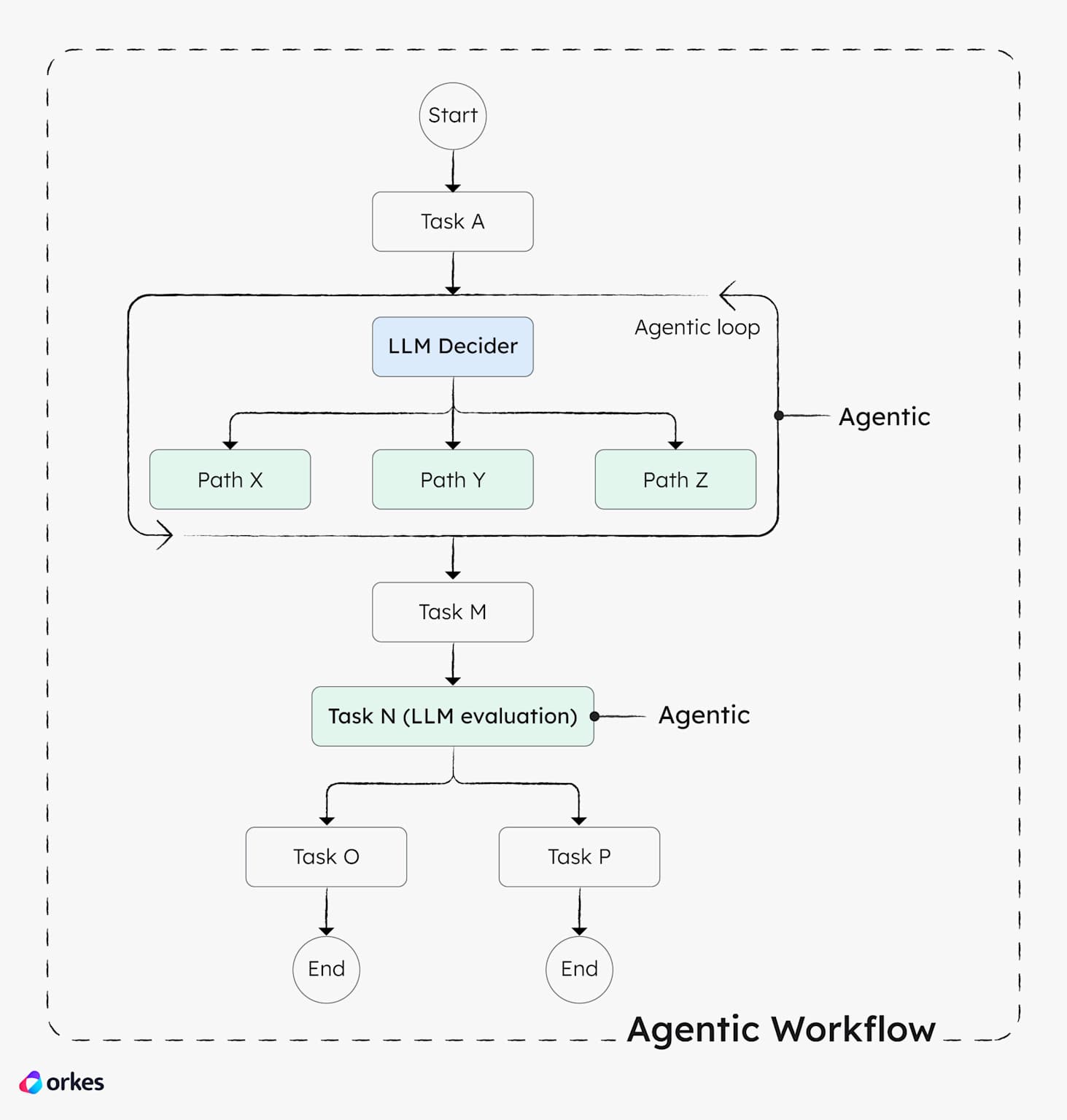
Visual representation of agentic AI architecture with perception, reasoning, and action components | Source: Search Images
What is Agentic AI? Core Concepts Explained
📚 Defining Agentic AI
Agentic AI refers to autonomous artificial intelligence systems that can plan, decide, and perform goal-directed actions with minimal human intervention. Unlike purely generative AI models that require explicit instructions, agentic systems operate proactively through continuous perception-reasoning-action (PRA) loops.[Source: TileDB] [Confidence: HIGH]
Key Architectural Components
- Planning Modules: Advanced reasoning systems that decompose complex goals into actionable step-by-step sequences, evaluating multiple pathways and selecting optimal strategies
- Memory Architecture: Persistent vector or semantic memory systems that store contextual information, enabling agents to maintain state across sessions and learn from past interactions
- Tool-Use Interfaces: API integration capabilities allowing agents to interact with external systems, databases, and applications to execute real-world tasks
- Reinforcement Learning Engines: Self-reflective learning mechanisms that adapt behavior based on feedback, iteratively optimizing performance over time
- Natural Language Processing: Advanced LLM integration for understanding human intent, generating contextually appropriate responses, and communicating across modalities
Agentic AI vs Traditional AI: The Critical Difference
| Aspect | Traditional AI | Agentic AI |
|---|---|---|
| Autonomy | Requires explicit human instructions for each task | Operates independently toward high-level goals |
| Planning | Follows pre-programmed logic or single-step responses | Multi-step strategic planning with dynamic adjustments |
| Adaptability | Static behavior without learning from outcomes | Continuous learning and strategy refinement |
| Scope | Single task or narrow domain | Complex, multi-domain problem solving |
| Human Role | Constant supervision and intervention | Strategic oversight with minimal intervention |
Real-World Example: Customer Service Transformation
Consider a traditional chatbot versus an agentic AI system in customer service:
- Traditional Chatbot: Follows decision trees, answers FAQ-style questions, escalates complex issues to humans
- Agentic AI System: Independently verifies billing errors by querying transaction databases, identifies discrepancies, processes refunds, updates CRM systems, generates explanation emails, and learns from customer satisfaction feedback—all without human intervention[Source: Aisera] [Confidence: HIGH]
Multi-Agent Orchestration: The Microservices Revolution for AI
One of the most significant trends defining 2026 is the shift from monolithic, all-purpose AI agents to orchestrated teams of specialized agents—a transformation Gartner analysts describe as the "microservices moment" for artificial intelligence.
📊 Explosive Growth Statistics
Gartner reported a staggering 1,445% surge in multi-agent system inquiries from Q1 2024 to Q2 2025, signaling fundamental architectural shifts in how enterprises design AI systems.[Source: Machine Learning Mastery] [Confidence: HIGH]
How Multi-Agent Systems Work
Rather than relying on a single agent attempting to handle all tasks, multi-agent architectures deploy:
- Specialized Expert Agents: Each agent focuses on a narrow domain with deep expertise (e.g., regulatory compliance, fraud detection, portfolio optimization in financial services)
- Coordination Protocols: Agents communicate through standardized interfaces, sharing insights and handing off tasks as workflows progress
- Shared Knowledge Bases: Distributed memory systems allow agents to access common context while maintaining specialized knowledge
- Orchestration Layers: Meta-agents or workflow engines manage task distribution, priority handling, and conflict resolution
Enterprise Applications in India
Manufacturing Excellence
In manufacturing facilities, multi-agent systems coordinate quality control agents (detecting defects), supply-chain agents (monitoring inventory), and procurement agents (vendor verification)—all working synchronously to minimize downtime.[Source: iLink Digital] [Confidence: HIGH]
Healthcare Coordination
Hospital systems deploy diagnostic agents (analyzing medical images), scheduling agents (optimizing appointments), and clinical workflow agents (coordinating multi-disciplinary care teams) to improve patient outcomes while reducing administrative burden.
Financial Services Transformation
Banks utilize fraud detection agents monitoring transactions in real-time, compliance agents ensuring regulatory adherence, and customer service agents handling inquiries—with handoffs occurring seamlessly based on transaction complexity and risk profiles.[Source: AWS] [Confidence: HIGH]
Physical AI: Bringing Intelligence into the Physical World
While software-based agentic AI transforms knowledge work, Physical AI represents the convergence of autonomous intelligence with robotics, sensors, and actuators—enabling machines to perceive, reason about, and interact with three-dimensional physical environments.

Physical AI-powered humanoid robots entering production environments in 2026 | Source: Search Images
Key Technological Enablers
- Vision-Language-Action (VLA) Models: Multimodal systems that integrate computer vision, natural language processing, and motor control—analogous to how the human brain coordinates perception with physical action[Source: Deloitte] [Confidence: HIGH]
- Neural Processing Units (NPUs): Edge computing chips enabling low-latency, real-time AI processing directly on robots without cloud dependency—critical for autonomous vehicles and surgical robotics
- Reinforcement Learning in Simulation: Robots master physical principles like gravity, friction, and object manipulation in virtual environments before real-world deployment
- Synthetic Data Generation: Physics-based simulations create vast training datasets for scenarios too dangerous or expensive to replicate in reality
The Humanoid Robot Breakthrough
At CES 2026, Hyundai Motor Group debuted the next-generation Atlas humanoid robot from Boston Dynamics, marking what Nvidia CEO Jensen Huang called "the ChatGPT moment for physical AI."[Source: Forbes] [2026-01-10] [Confidence: HIGH]
Why Humanoid Form Factor?
Humanoid robots aren't the most mechanically efficient design, but they offer a critical advantage: our world is built for human bodies. They can navigate existing infrastructure—doorways, staircases, factory floors, hospital corridors—without costly modifications to accommodate specialized robotic systems.
Current Deployment Examples
- BMW South Carolina Factory: Testing humanoids for precision manipulation tasks requiring dexterity that traditional industrial robots lack—two-handed coordination, complex gripping patterns
- Healthcare Rehabilitation Centers: Humanoid assistants guide patients through physical therapy exercises, provide weight support, and monitor progress
- Warehouse Logistics: Humanoids handle variable inventory without reprogramming—picking items of different shapes, sizes, and fragility levels[Source: Deloitte] [Confidence: HIGH]
India's Physical AI Landscape
India's manufacturing and logistics sectors are particularly well-positioned to benefit from physical AI adoption:
- Labor Shortages: Demographic shifts and skill gaps in precision manufacturing create demand for augmented workforce solutions
- Smart City Infrastructure: Government initiatives in smart transportation, surveillance, and public safety provide deployment opportunities for autonomous systems
- Agriculture Automation: Physical AI-powered robots for precision farming, soil testing, and crop monitoring address productivity challenges in rural areas
India's AI Governance Framework: Ethics, Accountability, and Trust
As India transitions from "Digital India" to "Intelligent India," the government has moved decisively to establish comprehensive regulatory frameworks balancing innovation with ethical accountability.

India's comprehensive AI governance guidelines emphasizing ethical, transparent, and inclusive AI development | Source: Search Images
Artificial Intelligence (Ethics and Accountability) Bill, 2025
In December 2025, India moved beyond voluntary guidelines into hard law with the AI Ethics and Accountability Bill, tabled by MP Bharti Pardhi. This represents India's first statutory framework to regulate AI-related ethics.[Source: Bettering Results] [2026-01-04] [Confidence: HIGH]
Key Provisions
- Statutory Ethics Committee: Multi-stakeholder body comprising experts in ethics, technology, law, data science, and human rights with investigative authority
- Financial Penalties: Fines up to ₹5 crore for ethical breaches, algorithmic bias, or non-compliance with transparency requirements
- Surveillance Restrictions: Strict rules governing facial recognition, behavioral prediction, and tracking systems without oversight
- Algorithmic Accountability: Requirements for explainability in automated decision-making affecting loans, employment, law enforcement
- Grievance Redressal Mechanisms: Institutional pathways for citizens to challenge AI-driven decisions with human review
India AI Governance Guidelines (November 2025)
MeitY's comprehensive guidelines establish seven foundational principles:[Source: IndiaAI.gov.in] [2025-11-04] [Confidence: HIGH]
- Trust as Foundation: AI systems must be reliable, secure, and consistent in performance across diverse populations
- People-First Approach: Technology serves human needs, not vice versa—prioritizing dignity, rights, and well-being
- Innovation Over Restraint: Regulatory frameworks should enable responsible innovation rather than impose blanket restrictions
- Inclusion and Non-Discrimination: Systems must avoid bias across India's linguistic, cultural, caste, gender, and regional diversity
- Accountability: Clear attribution of responsibility for AI outcomes—no "black box" defense for harmful decisions
- Transparency and Disclosures: Users must understand when interacting with AI, what data is collected, and how decisions are made
- Safety, Security, Sustainability: Lifecycle considerations for AI systems from development through deployment and decommissioning
IndiaAI Mission: From Policy to Implementation
The IndiaAI Mission, operating as an Independent Business Division under the Digital India Corporation, translates governance principles into tangible infrastructure and programs:
- AI Compute Infrastructure: Building sovereign AI compute capacity to reduce dependence on foreign cloud providers
- Indigenous AI Models: Supporting development of India-centric datasets and models trained on regional languages, cultural contexts
- Application Development Initiative (IADI): Funding scalable AI solutions in healthcare, agriculture, education, governance—with ₹1 crore work contracts for selected innovations[Source: IndiaAI.gov.in] [2026-01-14] [Confidence: HIGH]
- Safe & Trusted AI Projects: Deepfake detection systems, bias mitigation tools, forensic analysis capabilities through partnerships with IITs, C-DAC
🇮🇳 India AI Impact Summit 2026
Scheduled for February 16-20, 2026 in New Delhi, this flagship global gathering will bring together policymakers, researchers, industry leaders, and international organizations to shape inclusive, impactful AI frameworks. The Summit emphasizes practical deployment in healthcare, agriculture, education, and energy/climate sectors.[Source: PIB] [2026-01-20] [Confidence: HIGH]
Deepfake Detection: India's Battle Against Synthetic Media
As generative AI capabilities democratize, deepfake technology has escalated from novelty to national security concern. India recorded a staggering 280% year-on-year increase in deepfake incidents in Q1 2024, with 75% of Indians reporting exposure to deepfake content.[Source: Times of India] [2025-11-24] [Confidence: HIGH]
Real-World Impact in India
- Financial Fraud: In Kerala, a 73-year-old man lost ₹40,000 following a WhatsApp deepfake voice call seemingly from his friend requesting urgent help from Dubai
- Corporate Espionage: Global chipmaker's India office detected deepfake impersonation during job interviews—candidate synced facial movements and voice tone to appear as someone else
- Electoral Manipulation: During 2024 national elections, deepfake videos of politicians "speaking" in regional dialects they don't actually speak proliferated across social media
India's Deepfake Detection Infrastructure
Government-Funded Detection Projects
IndiaAI's Safe AI initiative has selected cutting-edge projects:[Source: PIB] [2025-10-06] [Confidence: HIGH]
- AI Vishleshak (IIT Mandi): Audio-visual deepfake detection with adversarial robustness, explainability, and handwritten signature forgery detection—partnered with Himachal Pradesh Directorate of Forensic Services
- Real-Time Voice Detection (IIT Kharagpur): Systems identifying synthetic voice patterns in phone calls and audio messages within milliseconds
- Kroop AI's Vizmantiz: Commercial tool deployed by enterprises for video interview verification, detecting facial movement inconsistencies and audio-video synchronization anomalies
Technical Detection Approaches
- Forensic Artifact Analysis: AI detectors identify subtle compression artifacts, pixel-level inconsistencies, and unnatural lighting patterns humans cannot perceive
- Temporal Coherence Checking: Analyzing frame-to-frame consistency in videos—deepfakes often show micro-glitches in temporal continuity
- Biometric Verification: Cross-referencing facial geometry, gait patterns, voice spectrograms against known authentic samples
- Content Provenance Watermarking: Coalition for Content Provenance and Authenticity (C2PA) metadata embedding tamper-evident digital signatures in media at creation[Source: NEGD] [2025-10-26] [Confidence: HIGH]
Regulatory Measures
India's multi-layered legal framework addresses deepfakes through:
- IT Rules 2021: Platforms must remove deepfake content within 36 hours (3 hours during election periods) or face liability
- Bharatiya Nyaya Sanhita (BNS) 2023: Criminal penalties up to 5 years imprisonment for cybercrimes, personation, forgery using synthetic media
- Digital Personal Data Protection Act (DPDPA) 2023: Fines up to ₹250 crore for misuse of biometric data without consent
- Election Commission Directives: Political parties must label AI-generated campaign content and remove deepfakes within 3 hours during Model Code of Conduct enforcement
Current Trends Shaping Agentic AI in 2026
1. Agentic Workflows Become Enterprise Standard
McKinsey's late-2025 report revealed 62% of businesses are currently testing agentic AI, with 23% implementing agents in at least one operational area. Forecasts indicate nearly 70% of organizations will incorporate autonomous agents into workflows by end of 2026.[Source: Forbes] [2026-01-13] [Confidence: HIGH]
2. Agent Mode Proliferation Across Platforms
Following ChatGPT's Agent Mode debut in 2025, competitors Gemini and Claude have added third-party app communication and multi-step action capabilities. By 2026, agentic features are transitioning from premium add-ons to baseline expectations across enterprise AI platforms.
3. Synthetic Data for Privacy-Preserving AI
GenAI models now create hyper-realistic synthetic datasets that mimic statistical properties of real data without exposing personal information—enabling AI research in sensitive sectors like healthcare and finance. Tools like CTGAN, Gretel Data Synthetic, and Ydata Synthetic are becoming industry standard.[Source: Kellton] [2026-02-03] [Confidence: HIGH]
4. Domain-Specific Models Outperform General-Purpose LLMs
Transfer learning and fine-tuning enable organizations to customize generative AI for industry workflows and compliance requirements. Specialized models for legal, medical, and financial sectors demonstrate higher accuracy than massive general-purpose alternatives.[Source: XCube Labs] [2025-11-12] [Confidence: HIGH]
5. The "Simulate-Then-Procure" Economy
Organizations no longer purchase robotics hardware based solely on paper specifications. 2026 marks the end of "CapEx guessing" as companies demand virtual simulations demonstrating performance before physical deployment—reducing risk and accelerating ROI validation.[Source: DBR77] [2025-12-29] [Confidence: HIGH]
Future Outlook: 2026-2030 Trajectory
🔮 Predictions and Opportunities
Workforce Transformation
Agentic AI will not eliminate jobs but redefine roles. Humans transition from task execution to strategic oversight, creative problem-solving, and ethical governance. New career categories emerge: AI agent trainers, orchestration architects, ethics auditors.
Healthcare Revolution
Multi-agent clinical systems coordinate diagnostics (image analysis), treatment planning (evidence-based recommendations), and operational workflows (scheduling, billing, insurance)—reducing physician administrative burden by up to 40% while improving care quality.
Education Personalization at Scale
Agentic tutors adapt to individual learning styles, pace, and knowledge gaps in real-time across India's multilingual education landscape. IndiaAI's Application Development Initiative already funds AI-powered learning platforms in rural areas.
Climate and Sustainability
Physical AI-powered precision agriculture optimizes water usage, fertilizer application, and crop yield prediction. Smart grid agents balance renewable energy supply-demand in real-time, accelerating India's green hydrogen economy transition.[Source: Vision IAS] [2026-01-08] [Confidence: HIGH]
Challenges Ahead
- Skill Gap Crisis: Demand for AI governance experts, prompt engineers, and agent orchestration specialists far outstrips supply. India's higher education system must rapidly adapt curricula.
- Regulatory Lag: Technology evolves faster than policy. The AI Ethics and Accountability Bill must remain adaptive through iterative amendments based on real-world deployment learnings.
- Algorithmic Bias at Scale: As agents make autonomous decisions affecting millions, embedded biases (gender, caste, regional) can amplify discrimination. Continuous auditing and bias mitigation protocols are non-negotiable.
- Cybersecurity Vulnerabilities: Agentic systems with tool-use capabilities become high-value attack vectors. Adversarial actors may manipulate agents to execute unauthorized transactions or access sensitive systems.
- Public Trust Deficit: Deepfake proliferation and AI-generated misinformation erode citizen confidence. Transparent deployment, explainability, and robust redressal mechanisms are critical for adoption.
⚡ Quick Facts About Agentic AI
- 📈 Market Growth: Agentic AI market projected to grow from $7.8 billion (2026) to $52 billion by 2030 [Source: Machine Learning Mastery] [Confidence: HIGH]
- 🚀 Enterprise Adoption: Gartner predicts 40% of enterprise applications will embed AI agents by end of 2026, up from less than 5% in 2025 [Source: Machine Learning Mastery] [Confidence: HIGH]
- 📊 Multi-Agent Explosion: Gartner reported 1,445% surge in multi-agent system inquiries from Q1 2024 to Q2 2025 [Source: Machine Learning Mastery] [Confidence: HIGH]
- 🇮🇳 India's Deepfake Crisis: 280% year-on-year increase in deepfake incidents in Q1 2024, 75% of Indians exposed to deepfake content [Source: Times of India] [2025-11-24] [Confidence: HIGH]
- ⚖️ Regulatory Framework: AI Ethics and Accountability Bill 2025 introduces fines up to ₹5 crore for ethical breaches [Source: Bettering Results] [2026-01-04] [Confidence: HIGH]
- 🤖 Physical AI Milestone: Nvidia CEO declared "ChatGPT moment for physical AI" at CES 2026 with humanoid robot breakthroughs [Source: Forbes] [2026-01-10] [Confidence: HIGH]
- 💰 IndiaAI Funding: Innovation Challenge 2026 offers work contracts up to ₹1 crore for AI solutions in AYUSH and MSME sectors [Source: IndiaAI.gov.in] [2026-01-14] [Confidence: HIGH]
- 🌐 Global Summit: India AI Impact Summit (Feb 16-20, 2026) convenes policymakers, researchers, industry leaders from 50+ countries in New Delhi [Source: PIB] [2026-01-20] [Confidence: HIGH]
- 🎯 Testing Phase Transition: McKinsey reports 62% of businesses testing agentic AI, 23% have implemented in at least one area [Source: Forbes] [2026-01-13] [Confidence: HIGH]
- 🏭 Manufacturing Deployment: BMW testing humanoids at South Carolina factory for precision tasks traditional robots cannot handle [Source: Deloitte] [2025-12-23] [Confidence: HIGH]
🧠 Knowledge Checkpoint Quiz
❓ Frequently Asked Questions
Agentic AI refers to autonomous artificial intelligence systems that can plan, decide, and perform goal-directed actions with minimal human intervention. Unlike traditional AI that follows pre-programmed scripts or responds to explicit prompts, agentic systems operate proactively through continuous perception-reasoning-action (PRA) loops. They integrate planning modules, persistent memory, reinforcement learning, and tool-use interfaces to decompose complex problems, adapt to dynamic conditions, and iteratively optimize behavior. Traditional AI requires constant human supervision; agentic AI acts as an autonomous colleague pursuing high-level objectives independently.[Source: TileDB] [2025-11-18] [Confidence: HIGH]
Physical AI represents AI systems that interact with and manipulate the physical world through robots, vehicles, and machinery. Unlike software-based AI confined to digital environments, Physical AI integrates sensory input (cameras, lidar, radar), spatial understanding, and decision-making to adapt to three-dimensional environments. Key enablers include vision-language-action (VLA) models coordinating perception with motor control, neural processing units for edge computing, and reinforcement learning in simulated environments. In 2026, Physical AI is transitioning from research labs to mainstream deployment in factories, warehouses, hospitals, and autonomous vehicles—representing what Nvidia CEO called the "ChatGPT moment" for robotics.[Source: Forbes] [2026-01-10] [Confidence: HIGH]
India moved beyond guidelines into hard law with the Artificial Intelligence (Ethics and Accountability) Bill, 2025, tabled in December 2025. The bill introduces a statutory Ethics Committee for AI comprising experts in ethics, technology, law, and human rights with investigative authority. It imposes fines up to ₹5 crore for ethical breaches, sets strict rules on surveillance and algorithmic decision-making, and mandates transparency in automated systems affecting loans, employment, and law enforcement. Additionally, MeitY's India AI Governance Guidelines (November 2025) establish seven principles: trust, people-first approach, innovation over restraint, inclusion, accountability, transparency, and safety. The IndiaAI Mission implements these through compute infrastructure, indigenous model development, application funding, and deepfake detection projects.[Source: Bettering Results] [2026-01-04] [Confidence: HIGH]
Multi-agent systems involve networks of specialized intelligent agents that communicate and coordinate seamlessly to achieve shared goals. Instead of a single all-purpose agent attempting all tasks, organizations deploy orchestrated teams where each agent focuses on a narrow area of expertise. For example, in financial services, one agent specializes in regulatory compliance, another in fraud detection, and another in portfolio optimization—they share insights and hand off tasks as workflows progress. Gartner reported a 1,445% surge in multi-agent system inquiries from Q1 2024 to Q2 2025, reflecting the shift from monolithic AI to distributed service architectures analogous to the microservices revolution in software engineering.[Source: Machine Learning Mastery] [Confidence: HIGH]
India's IndiaAI Mission has launched cutting-edge deepfake detection projects through institutions like IIT Mandi (AI Vishleshak for audio-visual detection with adversarial robustness), IIT Kharagpur (real-time voice detection), and C-DAC (forensic analysis tools). Technologies include AI-enabled forensic artifact analysis, temporal coherence checking, biometric cross-referencing, and Content Authenticity Initiative (C2PA) watermarking embedding tamper-evident digital signatures. Regulatory measures include IT Rules 2021 mandating platform removal within 36 hours (3 hours during elections), Bharatiya Nyaya Sanhita 2023 criminal penalties up to 5 years imprisonment, and DPDPA 2023 fines up to ₹250 crore for biometric data misuse. Commercial tools like Kroop AI's Vizmantiz are deployed for enterprise interview verification.[Source: PIB] [2025-10-06] [Confidence: HIGH]
The agentic AI revolution creates entirely new career categories beyond traditional software engineering: AI Agent Trainers (designing reward functions and training protocols for reinforcement learning), Orchestration Architects (designing multi-agent coordination systems and workflow integration), Ethics Auditors (evaluating AI systems for bias, transparency, accountability), Prompt Engineers (crafting effective natural language instructions for agent behavior), Safety Researchers (developing adversarial testing and robustness protocols), and Compliance Specialists (ensuring AI deployments meet regulatory requirements). India's IndiaAI Mission is investing heavily in capacity building and skilling programs to address the talent gap. Students should develop interdisciplinary expertise combining computer science, ethics, domain knowledge (healthcare, finance, law), and understanding of India's cultural and regulatory context.
Key risks include: Algorithmic Bias at Scale (agents making discriminatory decisions affecting millions across caste, gender, region), Cybersecurity Vulnerabilities (agents with tool-use capabilities becoming attack vectors), Accountability Gaps (difficulty attributing responsibility for autonomous decisions), and Workforce Displacement (automation of knowledge work). Mitigation strategies include India's statutory Ethics Committee with investigative powers, mandatory transparency and explainability requirements, continuous bias auditing using diverse test datasets representing India's linguistic and cultural diversity, human-in-the-loop escalation protocols for high-stakes decisions, secure API design with least-privilege access controls, and grievance redressal mechanisms allowing citizens to challenge AI-driven outcomes. The AI Ethics and Accountability Bill 2025 establishes legal liability frameworks ensuring organizations cannot hide behind "black box" defenses.[Source: Bettering Results] [2026-01-04] [Confidence: HIGH]
📚 Verified External Resources
- [OFFICIAL] IndiaAI Governance Guidelines - Comprehensive framework by Ministry of Electronics and Information Technology outlining principles, implementation roadmap, and sector-specific guidance for responsible AI development in India.
- [ACADEMIC] 7 Agentic AI Trends to Watch in 2026 - Technical deep-dive from Machine Learning Mastery covering multi-agent orchestration, market projections, and architectural patterns shaping enterprise AI adoption.
- [NEWS] Physical AI Made Waves At CES 2026 - Forbes analysis of breakthrough robotics demonstrations at Consumer Electronics Show 2026, including humanoid robots and autonomous systems transitioning to production.
- [OFFICIAL] IndiaAI Safe AI Initiative Projects - Press Information Bureau announcement of government-funded deepfake detection and bias mitigation research through IIT partnerships.


.png)


Comments
Post a Comment